

Genital Dysfunction Drugs Market is expected to reach US$ 7.16 billion by 2031 | DataM Intelligence
Genital Dysfunction Drugs Market
The Global Genital Dysfunction Drugs Market is expected to reach at a CAGR of 7% during the forecast period 2024-2031.
The Genital Dysfunction Drugs Market set to expand with rising ED prevalence, improved drug formulations, and greater awareness, driving strong demand and revenue growth.”
AUSTIN, TX, UNITED STATES, December 19, 2025 /EINPresswire.com/ -- Overview of the Market:— DataM Intelligence
The global Genital Dysfunction Drugs Market is emerging as one of the fastest-expanding therapeutic domains within the broader pharmaceutical industry. Increasing prevalence of erectile dysfunction (ED), sexual desire disorders, fertility complications, and hormone imbalance related genital issues are propelling high market demand. Genital dysfunction significantly impacts both male and female populations due to age-related physiological decline, chronic health disorders, stress, metabolic diseases, and lifestyle risks. As patient awareness increases and prescription-based treatment demand grows, the market is witnessing greater investment in product innovation, drug approvals, clinical research, and combination treatment therapies. According to DataM Intelligence, The Global Genital Dysfunction Drugs Market was valued at US$ 4.15 billion in 2023 and is projected to reach US$ 7.16 billion by 2031, growing at a CAGR of 7% during the forecast period.
To Download Sample Report Here: https://www.datamintelligence.com/download-sample/genital-dysfunction-drugs-market
The leading segment in this market is erectile dysfunction treatment, driven by the widespread availability of oral pharmaceuticals and increasing male patient populations suffering from vascular and psychological disorders. Regionally, North America leads the market, driven by high awareness levels, strong healthcare infrastructure, favorable reimbursement policies, and robust pharmaceutical manufacturing activities. Rising adoption of hormone-replacement therapy among women and increasing penetration of generic drugs in Asia-Pacific are further expanding access to treatment. Growing telemedicine services, increased sexual wellness awareness, and expanding geriatric demographics are reinforcing global market expansion.
Key Highlights from the Report:
Market expected to surpass US$7.16 billion value by 2031, supported by demand for erectile dysfunction and sexual desire disorder drugs.
Erectile dysfunction remains the highest revenue-generating application segment in 2024.
North America accounts for the largest market share due to high drug availability and advanced healthcare expenditure.
Increasing generic competition is significantly reducing retail price gaps across Asian and Latin American markets.
Hormonal therapy demand among women suffering from vulvovaginal atrophy and menopause symptoms is rapidly rising.
Pharmaceutical companies are entering long-term partnerships to expand global distribution agreements.
Market Segmentation:
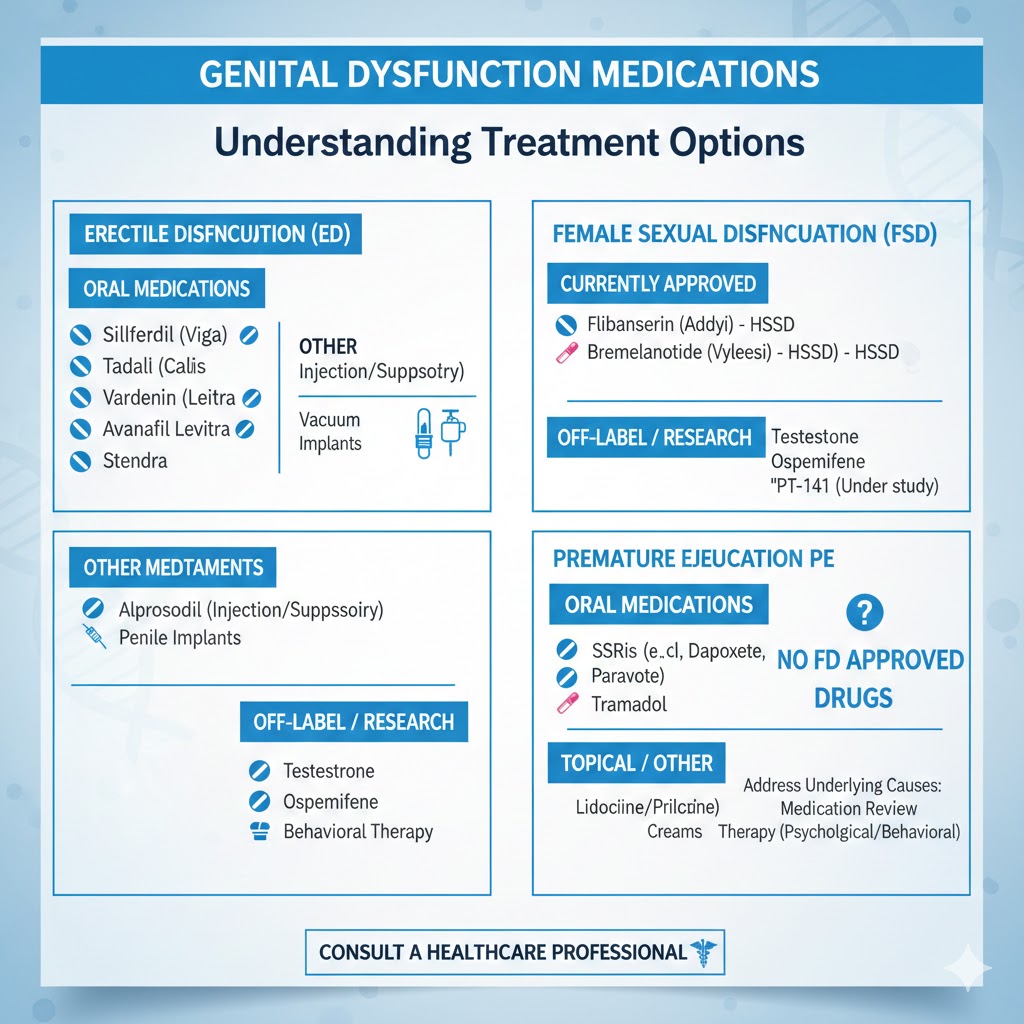
The Genital Dysfunction Drugs Market is broadly segmented based on product type, route of administration, gender application, distribution channel, and end-user category. Among product types, oral phosphodiesterase type-5 (PDE5) inhibitors, including sildenafil, tadalafil, and vardenafil, dominate market consumption due to their proven efficacy and patient preference for non-invasive treatment. Meanwhile, the injectable therapy segment, including alprostadil, is witnessing moderate growth, particularly among patients who are unresponsive to oral drugs. Hormone therapy drugs, including testosterone and estrogen-based solutions, form another significant category supporting both male and female genital disorder treatments.
Segmentation by gender application shows that drugs targeting male genital dysfunction dominate current market share because erectile dysfunction appears far more frequently and has a higher diagnosis rate. However, treatments for female sexual dysfunction are expanding considerably, supported by clinical research for hypoactive sexual desire disorder drugs, menopause therapy, and tissue-repair medicines. Rising approval of female-targeted formulations is gradually reshaping market balance.
From a distribution standpoint, hospital pharmacies and retail pharmacies remain the leading channels, controlling a majority of drug sales due to specialist-driven prescriptions and patient reliance on supervised clinical settings. However, online pharmacy channels are gaining remarkable traction, supported by digital healthcare adoption, discreet purchasing behavior, and improved medicine accessibility.
Speak to Our Analyst and Get Customization in the report as per your requirements: https://www.datamintelligence.com/customize/genital-dysfunction-drugs-market
Regional Insights:
Regionally, North America leads the global Genital Dysfunction Drugs Market, supported by strong healthcare spending, a high number of diagnosed patients, reimbursement coverage for branded treatments, and favorable U.S. FDA review systems that accelerate product availability. The region also demonstrates high levels of consumer willingness to seek treatment for sexual health conditions, reducing the stigma historically associated with genital dysfunction.
Europe holds the second-largest market share, driven by an aging population, increasing hormone replacement therapy usage among women, and expanding urology-based therapeutic programs. Strong presence of research-oriented pharmaceutical companies and improving policy support for women’s sexual disorder treatment create a steady opportunity path.
Asia-Pacific is the fastest-growing regional market, supported by rapid urbanization, expanding gender disorder awareness, evolving lifestyle diseases, and growing acceptance of sexual wellness treatments. India, China, and Japan are emerging hotspots, where generic drugs play a significant role in enhancing affordability.
Latin America and the Middle East & Africa show moderate growth opportunities due to rising medical tourism, expanding retail pharmacy networks, and increasing investments in hormonal therapy initiatives.
Market Dynamics:
Market Drivers
Multiple forces are accelerating market expansion. Growing prevalence of chronic diseases such as diabetes, obesity, cardiovascular disorders, hypertension, and neurological illnesses are directly increasing ED prevalence worldwide. Moreover, rising stress, sedentary lifestyle patterns, smoking, alcohol consumption, and hormonal imbalance contribute to genital dysfunction in young adults as well. Pharmaceutical research advancements, increased R&D expenditure, and rising awareness about treatment alternatives have led to greater diagnosis frequency.
Market Restraints
Despite promising growth, the market faces multiple limitations. Drug-related side effects, including headaches, nausea, and interaction risks with cardiovascular medicines, remain major restraints. Social stigma, limited awareness among women, poor sexual health literacy, and patient hesitation to seek medical help also restrict diagnosis rates. Furthermore, patent expiration of leading drugs has encouraged generic penetration, reducing branded revenue margins. Regulatory delays in novel drug approvals add another layer of market complexity.
Market Opportunities
The future offers strong commercial prospects. Increasing female sexual disorder treatment research, expansion in telemedicine-based prescription services, and development of novel drug formulations such as topical creams, longer-duration dosage tablets, and personalized hormone therapy solutions will reshape market opportunities. Growing investments in biotechnology and tissue-repair drug manufacturing for genital damage treatment also present new innovation pathways. Additionally, pharmaceutical companies are expanding into underserved emerging economies, where improving sexual health education and medical infrastructure will unlock long-term growth potential.
Buy Now & Unlock 360° Market Intelligence: https://www.datamintelligence.com/buy-now-page?report=genital-dysfunction-drugs-market
Frequently Asked Questions (FAQs):
How Big is the Genital Dysfunction Drugs Market in 2024?
What is the projected market growth rate for genital dysfunction drugs through 2032?
Which region dominates the global genital dysfunction drugs industry?
Who are the key players operating in the market?
What future opportunities are expected to shape the genital dysfunction drugs market?
Company Insights:
Pfizer Inc.
Eli Lilly and Company
Bayer
Teva Pharmaceutical Industries Ltd.
Lupin
Viatris Inc. (Mylan Inc.)
Futura Medical
23andMe (Lemonaid Health)
Hims & Hers Health, Inc.
BlueChew
Recent Developments:
United States:
November 2025: Urology updates noted FDA approvals for advanced urologic therapies, such as fosfomycin for complicated UTIs and pembrolizumab combinations for bladder cancer, indirectly supporting genital dysfunction management through improved regional health infrastructure.
October 2025: Market analyses highlighted sustained growth in erectile dysfunction drugs, with the US segment projected at USD 1.3 billion for 2025, driven by dominance of PDE5 inhibitors like sildenafil holding 42% share due to generics and accessibility.
September 2025: Urologists anticipated key FDA decisions in Q4, including potential approvals for gepotidacin targeting uncomplicated urogenital gonorrhea, a condition linked to genital health issues, with a PDUFA date of December 11, 2025, signaling upcoming treatment expansions.
Europe:
November 2025: CHMP recommended new medicines and extensions, though none directly for ED; market reports underscored 9.5% CAGR growth to 2030, propelled by Viagra and emerging "other drugs" segments.
October 2025: EMA approvals focused on non-ED areas like endocrinology with Lynket for menopausal vasomotor symptoms, but broader sexual health trends indicated ongoing reliance on established ED drugs like Viagra with 62% revenue share.
September 2025: Projections emphasized oral PDE5 inhibitors' 85% market dominance and sildenafil's leading 42% share in erectile dysfunction treatments, reflecting steady demand amid aging populations.
Unlock 360° Market Intelligence with DataM Subscription Services: https://www.datamintelligence.com/reports-subscription
Conclusion:
The Genital Dysfunction Drugs Market is undergoing a transformative shift supported by rising global patient populations, pharmaceutical innovation, and growing awareness of sexual health treatment benefits. As the stigma surrounding sexual dysfunction declines, patients are increasingly willing to seek medical assistance, stimulating commercial expansion. Strengthening digital medicine channels, the introduction of safer drug variations, and the approval of advanced formulations will further accelerate adoption over the coming years. Regions such as Asia-Pacific are expected to become major growth hubs, backed by cost-efficient manufacturing and strong generic penetration. With increasing female disorder treatment initiatives, greater investment in clinical research, and expanding consumer acceptance, the market outlook remains highly promising through 2032.
Related Reports:
Cancer Therapeutics Market
Anti Depression Drugs Market
Sai Kiran
DataM Intelligence 4Market Research
+1 877-441-4866
Sai.k@datamintelligence.com
Visit us on social media:
LinkedIn
X
Legal Disclaimer:
EIN Presswire provides this news content "as is" without warranty of any kind. We do not accept any responsibility or liability for the accuracy, content, images, videos, licenses, completeness, legality, or reliability of the information contained in this article. If you have any complaints or copyright issues related to this article, kindly contact the author above.
